
4-Part Seasonal Series
Winter Commercial Heating & Plumbing Guide
Wisconsin winters test every commercial heating and plumbing system. This four-part series helps facility managers respond fast when something fails — and run more efficiently when nothing does. From no-heat emergencies and rooftop snow loads to burst pipes and heating cost reduction, each guide is built on what our service teams see in Southeast Wisconsin buildings every winter.
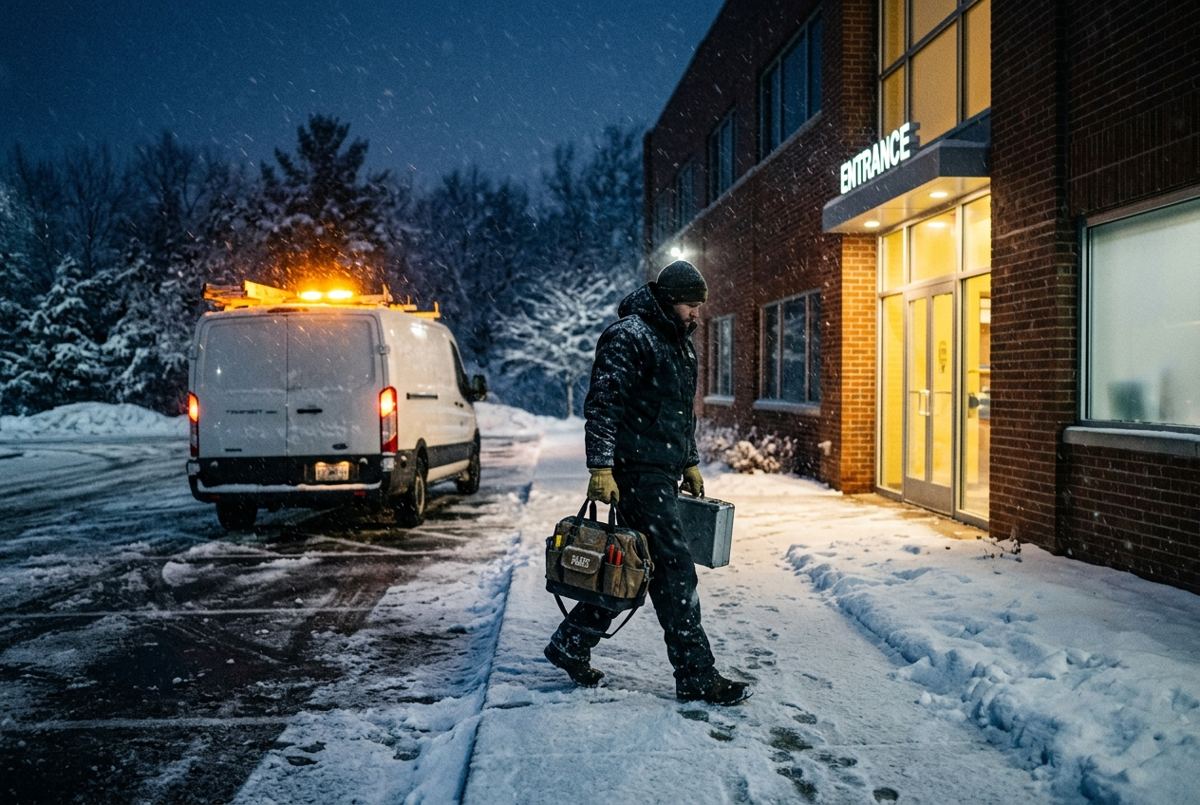
No Heat? An Emergency Response Plan for Commercial Buildings in Wisconsin Winters
When a commercial building loses heat at 2 a.m. in January, the first 60 minutes matter most. Here is a practical no-heat emergency response plan facility managers can put in place before the next cold snap.
Read part 1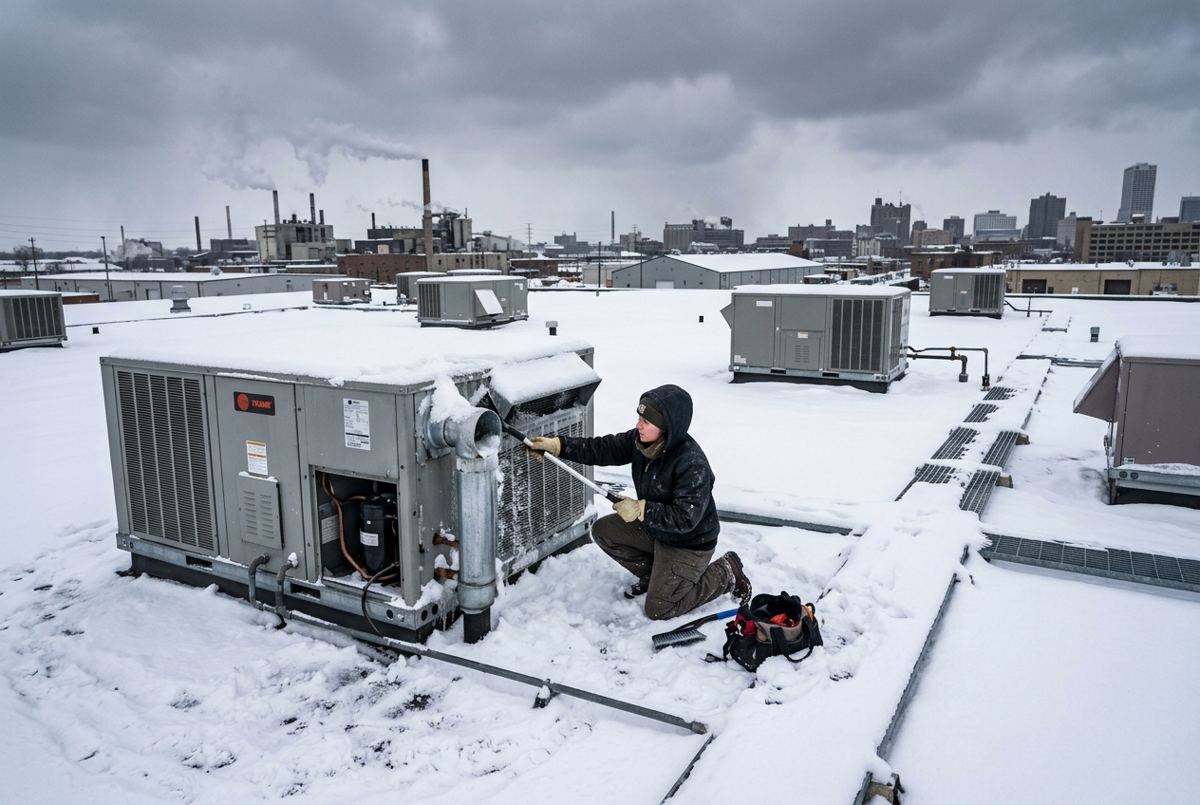
Snow & Ice on Rooftop Units: How to Protect RTUs, Flues, and Intakes This Winter
Drifting snow and ice can block flues, starve burners of combustion air, and damage rooftop HVAC equipment. Learn how to protect your rooftop units through a Wisconsin winter.
Read part 2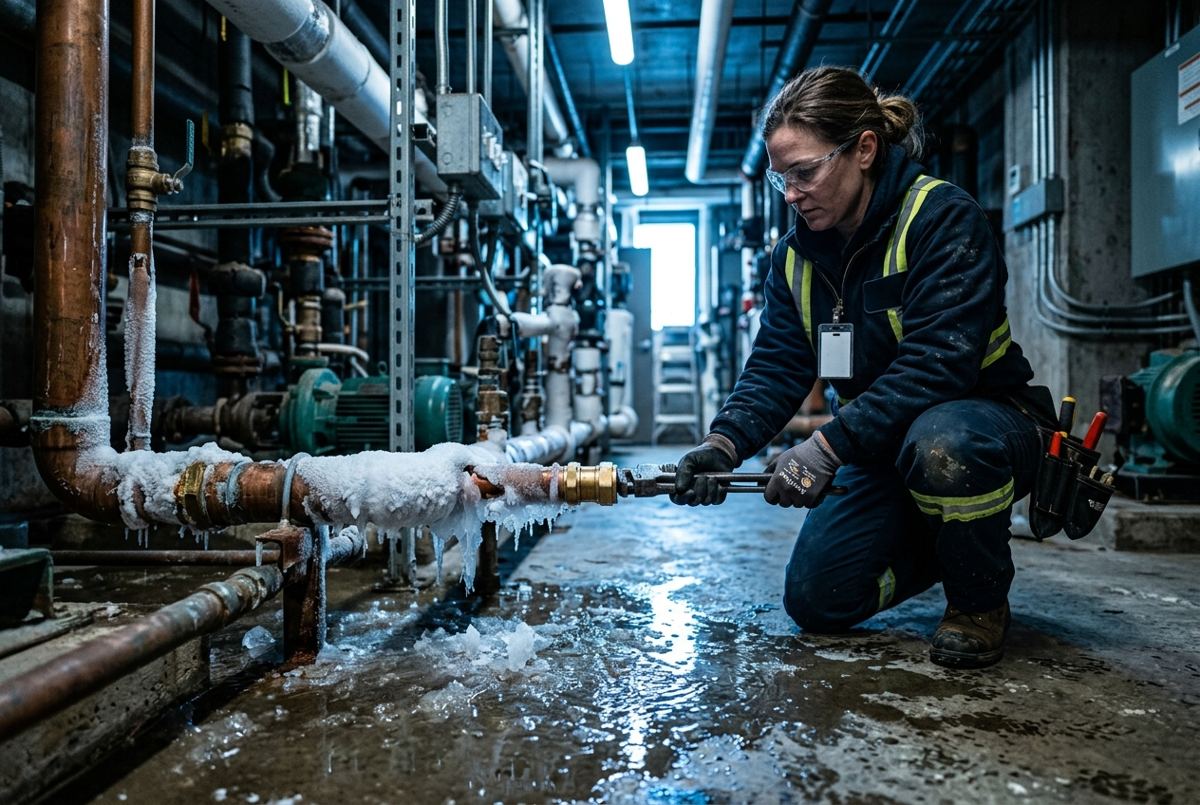
Frozen & Burst Pipe Response: A Step-by-Step Guide for Commercial Facilities
A burst pipe can release hundreds of gallons of water per hour. Here is exactly what facility managers should do when a pipe freezes or bursts – and how to prevent it from happening again.
Read part 3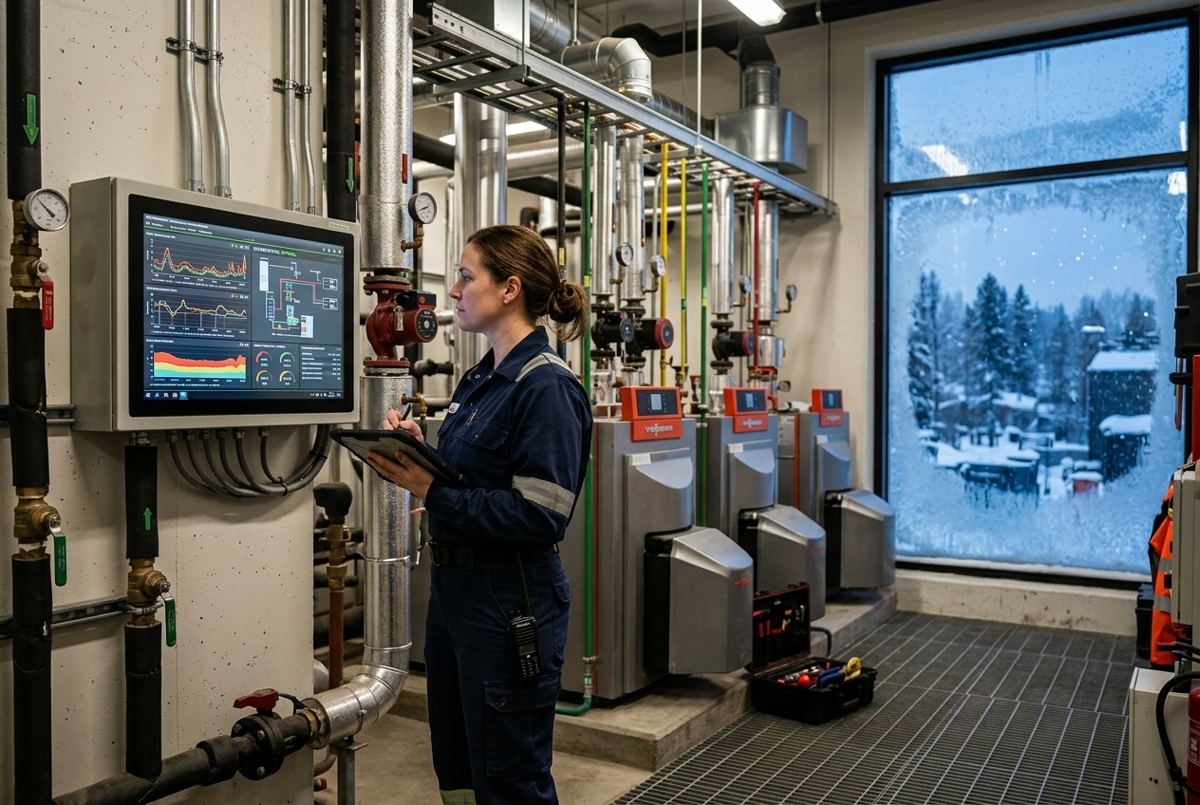
Cutting Winter Heating Costs: Boiler and Building Automation Optimization Strategies
Heating is often the largest winter utility expense for Wisconsin commercial buildings. These boiler tuning and building automation strategies can reduce fuel use without sacrificing comfort.
Read part 4Frequently Asked Questions
What should a facility do first when a commercial building loses heat?
Confirm the scope (one zone or the whole building), check the building automation system for alarms, verify gas and power supply, protect vulnerable piping, and call your mechanical contractor with equipment details. Avoid repeatedly resetting lockouts, which can mask safety faults.
Can snow and ice damage rooftop HVAC units?
Yes. Drifting snow can block flue outlets and combustion air intakes, causing lockouts or unsafe venting. Ice can damage fan blades and coils, and heavy snow loads stress curbs and roof seals. Clearing around intakes and flues after storms is essential.
What should I do if a pipe bursts in my commercial building?
Shut off the nearest isolation valve or the main water supply, cut power to affected electrical equipment if safe, document damage for insurance, and call a commercial plumbing contractor. Then identify why the pipe froze so it does not happen again.
How can commercial buildings reduce winter heating costs?
Tune boilers for efficient combustion, enable outdoor reset, optimize start/stop schedules and setbacks in the BAS, fix economizers stuck open, and evaluate high-efficiency condensing boilers or heat pumps when equipment is near end of life.
Does Bredan provide 24/7 emergency heating service?
Yes. Bredan Mechanical Systems provides 24/7 emergency service for commercial and industrial facilities across Waukesha, Milwaukee, Kenosha, Racine, Washington, Ozaukee, and Jefferson counties.