
4-Part Seasonal Series
Fall Commercial Heating, Cooling & Plumbing Guide
Our four-part seasonal series gets Southeast Wisconsin commercial and industrial facilities ready for winter. Work through it in order — from rooftop units and furnaces, to boiler startup, cooling equipment shutdown, and plumbing freeze protection — and you will enter heating season with fewer surprises and lower emergency repair costs.
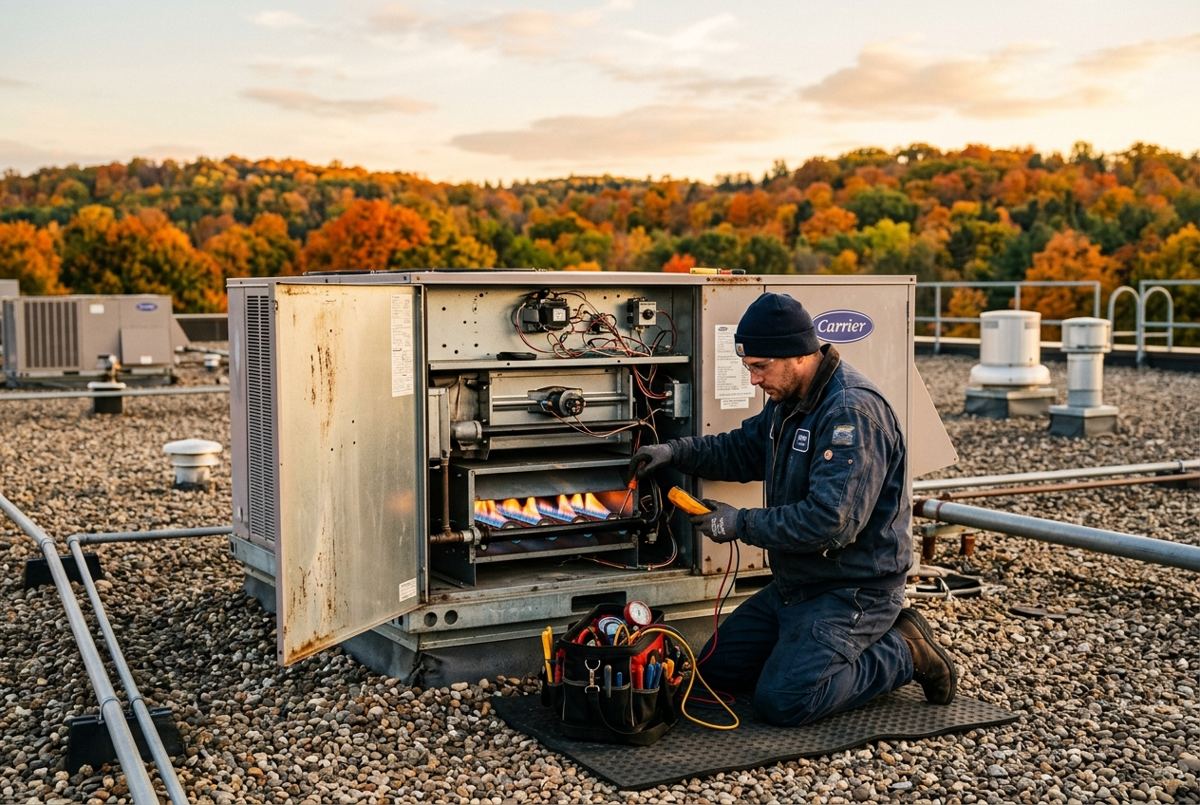
Commercial Furnace & Rooftop Unit Fall Tune-Up Checklist for Wisconsin Facilities
The first cold snap in Southeast Wisconsin is the worst time to find out a rooftop unit won't light. Here is the fall tune-up checklist our service technicians use on commercial furnaces and gas-fired RTUs before heating season begins.
Read part 1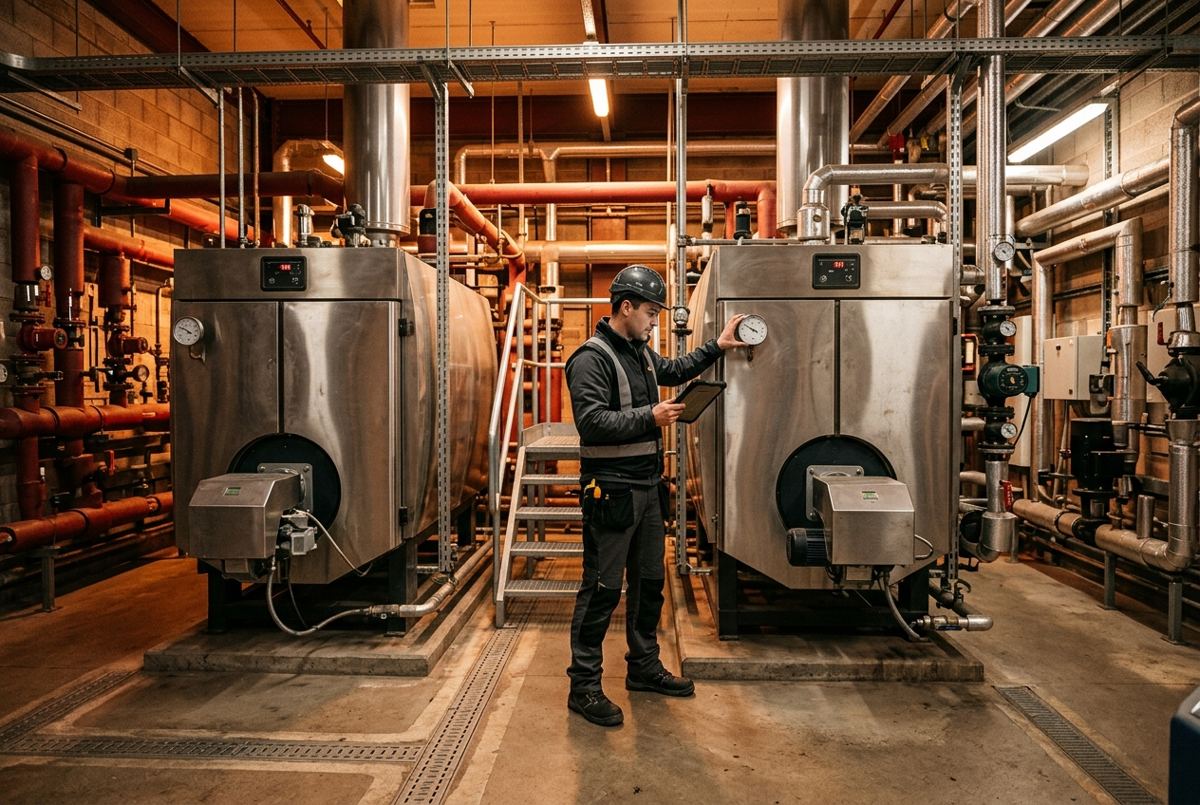
Commercial Boiler Startup: How to Prepare Your Hydronic System for Heating Season
A commercial boiler that has been idle all summer needs more than a flip of the switch. Learn the startup and inspection steps that protect your hydronic heating system, reduce fuel costs, and keep occupants comfortable all winter.
Read part 2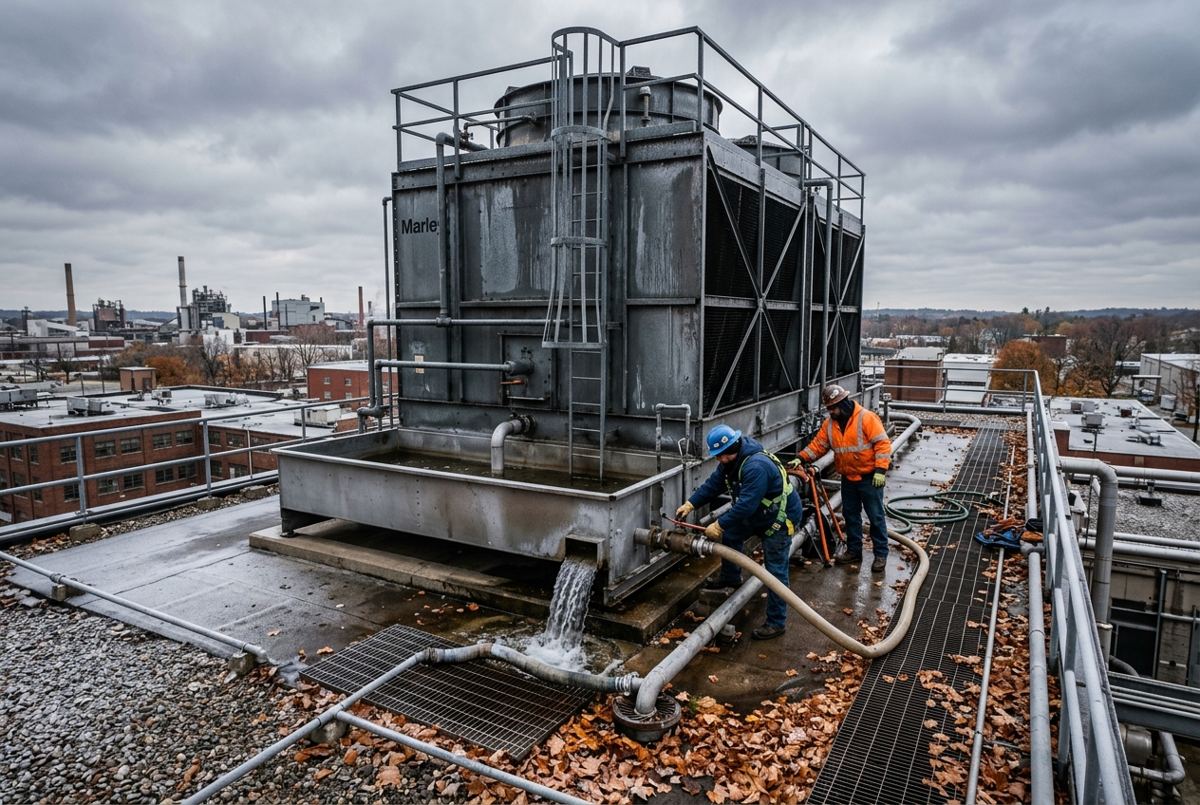
Cooling Tower & Chiller Winterization: A Fall Shutdown Guide for Commercial Buildings
In Wisconsin, an improperly winterized cooling tower or chiller can mean cracked basins, split coils, and a costly spring startup. Here is how to shut down your cooling equipment the right way before freezing temperatures arrive.
Read part 3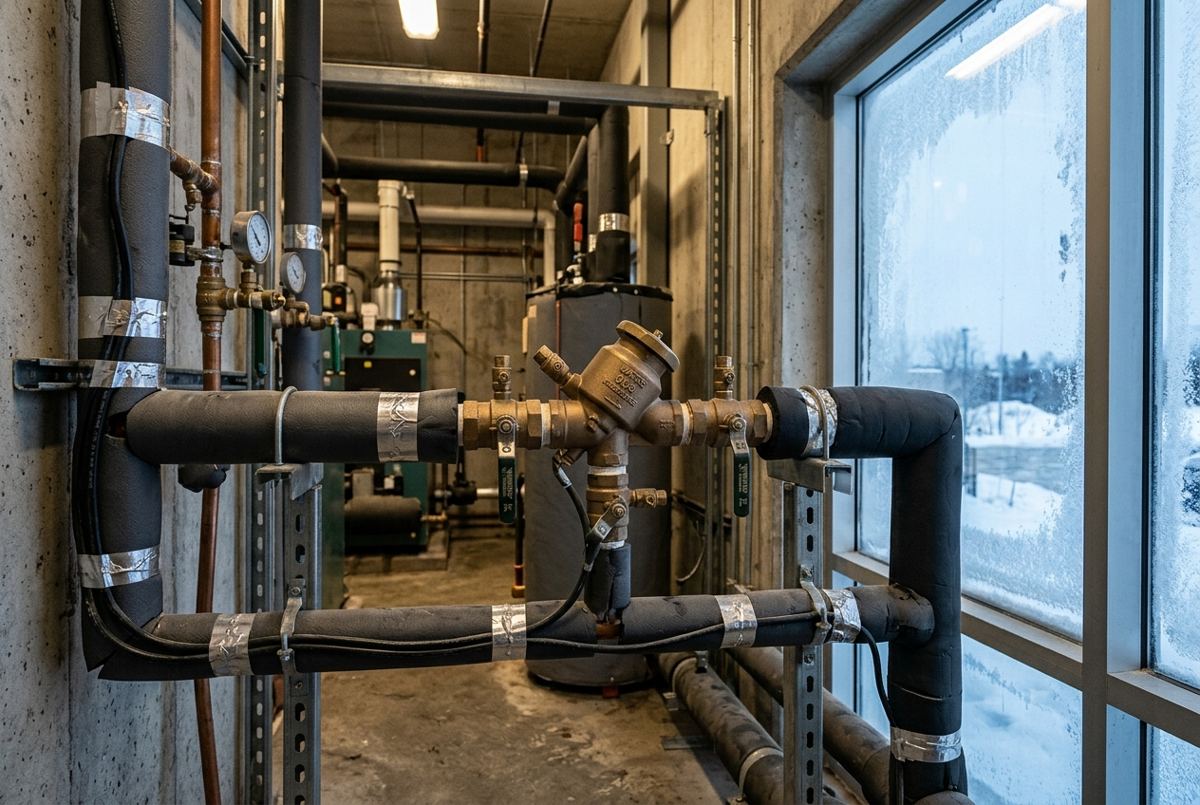
Commercial Plumbing Freeze Protection: Backflow, Piping & Drains Before Winter Hits
A single frozen pipe can shut down a production line, flood a classroom, or damage inventory. Learn how to protect backflow preventers, exposed piping, and drains in your commercial building before Wisconsin winter arrives.
Read part 4Frequently Asked Questions
When should commercial buildings schedule a fall HVAC tune-up in Wisconsin?
Ideally in September or early October, before sustained heating demand begins. This leaves time to order parts and complete repairs before the first cold snap, and avoids emergency service premiums.
What does a commercial furnace or rooftop unit tune-up include?
Burner and ignition cleaning, heat exchanger inspection, combustion analysis, safety control testing, filter and belt replacement, economizer checks, and verification of heating setpoints and schedules in the building automation system.
Do cooling towers need to be winterized?
Yes. Towers that shut down for winter should be drained, cleaned, and locked out. Towers that run year-round need verified basin heaters, heat trace, and controls that maintain minimum water temperatures to prevent freezing.
How do I protect commercial plumbing from freezing?
Identify piping in exterior walls and unheated spaces, insulate or heat-trace vulnerable lines, protect or drain backflow preventers, shut off and drain exterior hydrants, and coordinate with HVAC so perimeter spaces never drop below safe temperatures.
Which areas does Bredan Mechanical Systems serve for fall maintenance?
Commercial and industrial facilities throughout Waukesha, Milwaukee, Kenosha, Racine, Washington, Ozaukee, and Jefferson counties in Southeast Wisconsin.
Book Your Fall Tune-Up
Get your heating, cooling, and plumbing systems winter-ready. Tell us about your facility and we'll schedule a technician.