If your commercial HVAC system suddenly starts making strange noises, don't ignore it.
A noisy HVAC system in a commercial building is often an early warning sign that something inside the system is failing, loose, blocked, or working harder than it should. What starts as a minor rattling sound can quickly turn into expensive repairs, rising energy bills, uncomfortable tenants, or complete system downtime.
For building owners, facility managers, warehouses, manufacturing facilities, and commercial properties, identifying HVAC noise issues early can save thousands in emergency repairs and lost productivity.
In this guide, we'll break down the most common commercial HVAC noises, what causes them, and when it's time to call a professional.
Why Is My Commercial HVAC System So Loud?
Commercial HVAC systems naturally produce some operational noise. Rooftop units, air handlers, compressors, and ductwork all create sound during normal operation.
But unusual sounds are different.
New noises — or noises that suddenly become louder — usually indicate mechanical wear, airflow problems, electrical issues, or loose components inside the system.
Ignoring those warning signs can lead to:
- Higher utility costs
- Reduced energy efficiency
- Premature equipment failure
- Emergency downtime
- Expensive commercial HVAC repairs
- Reduced indoor comfort
The key is understanding what the sound means before the issue gets worse.
Common Commercial HVAC Noises and What They Mean
1. Rattling Sounds From Your HVAC Unit
One of the most common complaints in commercial buildings is a rattling HVAC sound.
Common HVAC Rattling Sound Causes:
- Loose access panels
- Vibrating ductwork
- Loose screws or mounting hardware
- Debris inside the unit
- Worn motor components
- Damaged fan blades
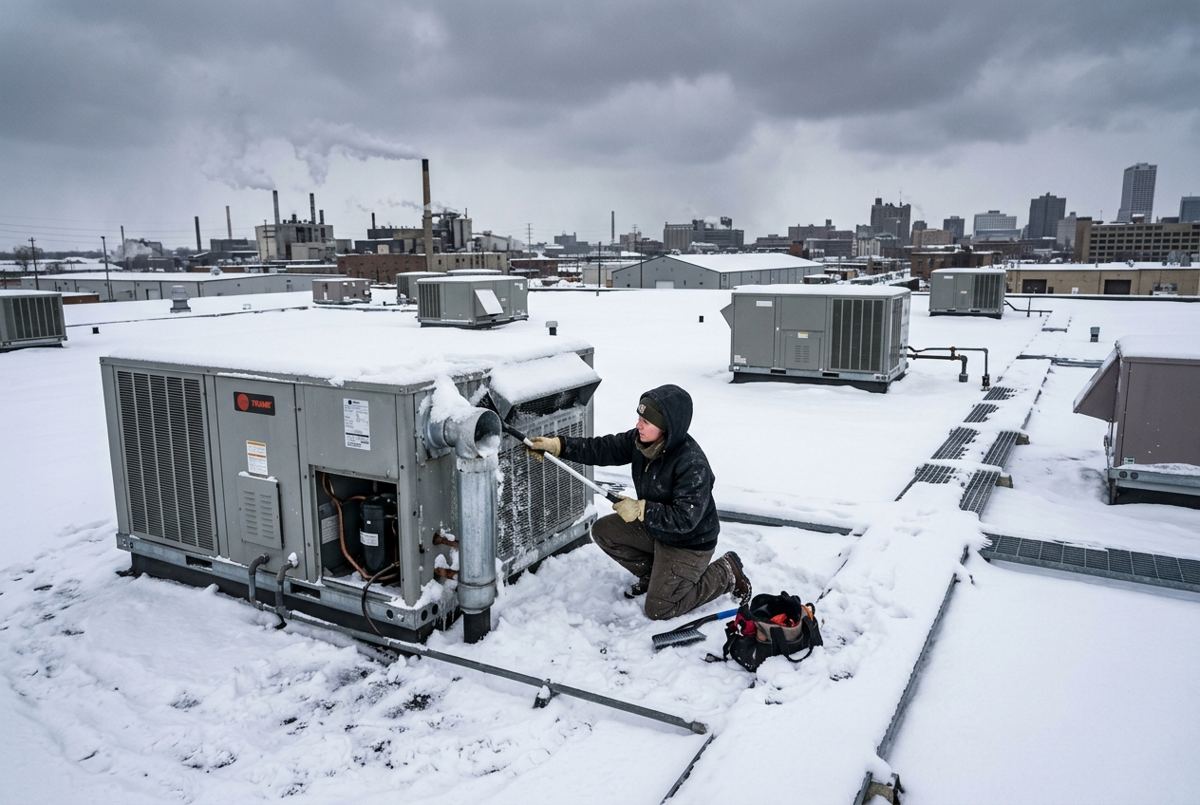
In rooftop units, rattling often worsens over time due to vibration and weather exposure.
What It Means: A rattling noise may seem minor at first, but it can quickly escalate into larger mechanical failures if loose parts damage nearby components.
Recommended Solution: Have the unit professionally inspected before vibration causes additional wear or system damage.
2. Banging or Clanking Noises
Loud banging sounds usually indicate a serious internal issue.
Possible Causes:
- Broken blower components
- Loose or damaged belts
- Compressor problems
- Unbalanced fan assemblies
- Failing motors
What It Means: Metal-on-metal contact inside a commercial HVAC system is never normal. A banging sound often means components are loose, damaged, or out of alignment.
Recommended Solution: Shut the system down if the noise is severe and schedule immediate commercial HVAC service.
3. Buzzing Sounds From Rooftop HVAC Units
A buzzing rooftop unit can point to electrical or mechanical problems.
Loud Rooftop Unit Solutions Often Involve:
- Electrical connection repairs
- Capacitor replacement
- Contactor replacement
- Motor diagnostics
- Compressor inspections
What It Means: Buzzing can indicate electrical arcing, failing components, or restricted airflow causing the system to strain. Electrical issues should never be ignored in commercial HVAC systems.
Recommended Solution: Have a qualified commercial HVAC technician diagnose the issue before it leads to system shutdown or electrical damage.
4. Whistling or High-Pitched Air Noises
Whistling noises usually stem from airflow restrictions.
Common Causes:
- Dirty air filters
- Blocked vents
- Duct leaks
- Poor airflow design
- Closed dampers
What It Means: Your HVAC system may be working harder than necessary to move air throughout the building. This increases energy consumption and system wear.
Recommended Solution: A full airflow inspection can identify restrictions and improve system efficiency.
5. Hissing Sounds
A hissing HVAC system is often a sign of escaping air or refrigerant.
Possible Causes:
- Refrigerant leaks
- Leaking ductwork
- Valve problems
- Pressure issues
What It Means: Refrigerant leaks can severely impact cooling performance and increase operating costs. In commercial buildings, this can affect occupant comfort and equipment performance.
Recommended Solution: Schedule immediate service to locate and repair the leak before larger damage occurs.
Why HVAC Noise Problems Get Worse Over Time
Commercial HVAC systems operate under heavy demand — especially in warehouses, industrial facilities, office buildings, retail centers, and manufacturing environments.
Small issues become larger problems when systems continue operating under stress.
What starts as:
- A loose panel
- Minor vibration
- Dirty filter
- Small motor imbalance
Can eventually lead to:
- Compressor failure
- Motor burnout
- Higher energy bills
- System downtime
- Expensive emergency repairs
Early diagnosis is always more cost-effective than reactive repairs.
The Hidden Cost of a Noisy Commercial HVAC System
Many facility managers focus only on whether the system is still cooling or heating.
But noise problems often signal efficiency loss long before total failure occurs.
A struggling system typically:
- Uses more electricity
- Runs longer cycles
- Places additional strain on components
- Reduces equipment lifespan
- Creates inconsistent indoor temperatures
That means higher operating costs month after month.
Addressing HVAC noise early can improve:
- Energy efficiency
- Occupant comfort
- Equipment lifespan
- Indoor air quality
- Long-term repair costs
Preventative Maintenance Helps Stop HVAC Noise Before It Starts
The best way to prevent commercial HVAC noise issues is through routine maintenance.
Preventative maintenance helps identify:
- Loose components
- Motor wear
- Airflow restrictions
- Belt deterioration
- Electrical issues
- Refrigerant problems
Before they become major failures.
For commercial facilities, regular HVAC inspections reduce downtime and improve system reliability year-round.
When To Call a Commercial HVAC Professional
You should schedule service if your HVAC system:
- Suddenly becomes louder
- Produces new sounds
- Vibrates excessively
- Causes uneven temperatures
- Runs constantly
- Increases energy bills unexpectedly
Waiting too long can turn a simple repair into a major replacement.
Trust Bredan Mechanical Systems
At Bredan Mechanical Systems, we help commercial and industrial facilities diagnose, repair, and maintain complex HVAC systems before small problems become major disruptions.
From noisy rooftop units to complete commercial HVAC diagnostics, our team delivers reliable solutions focused on performance, efficiency, and long-term system health.
If your commercial HVAC system is making unusual noise, don't wait for a breakdown.